
Asphalt shingle roofing remains one of the most practical and cost-effective roofing solutions for Mission Viejo homeowners, particularly in older neighborhoods and properties seeking economical protection without tile roofing’s substantial weight and expense. While less common than tile in newer developments, thousands of Mission Viejo homes still feature asphalt shingle roofs requiring specialized repair expertise to maintain performance and extend service life.
Our shingle roof repair services address the unique challenges facing asphalt roofing systems in Southern California’s intense climate. From wind-damaged shingles and thermal deterioration to flashing failures and ventilation issues, we provide comprehensive repair solutions that restore your roof’s protective integrity while maximizing your existing investment before complete replacement becomes necessary.
Asphalt Shingle Roofing in Mission Viejo’s Climate
Asphalt shingle roofing faces distinctive challenges in Mission Viejo compared to regions with more moderate climates. Southern California’s intense ultraviolet radiation, significant temperature fluctuations, and periodic severe wind events accelerate shingle deterioration through mechanisms that don’t affect roofs in cooler, cloudier climates.
The U.S. Census Bureau reports Mission Viejo’s median home was built in 1977, meaning many properties still feature original or first-replacement asphalt shingle roofs installed during the 1970s-1990s. These aging systems increasingly require repair as materials approach or exceed their intended 20-25 year service lives. Understanding how Southern California’s environment affects shingle performance helps property owners recognize when professional repair intervention becomes necessary.
Asphalt shingles consist of fiberglass or organic mat backing coated with weathering-grade asphalt and topped with ceramic granules providing UV protection and fire resistance. The Asphalt Roofing Manufacturers Association confirms that proper installation and maintenance can help shingles reach their rated lifespan, but environmental factors significantly influence actual performance. Mission Viejo’s climate creates accelerated aging through multiple deterioration mechanisms.
UV radiation intensity in Southern California ranks among the highest in the continental United States. This constant solar exposure causes photooxidation—chemical breakdown of asphalt polymers that makes shingles brittle and prone to cracking. Granule loss accelerates as asphalt binders deteriorate, exposing underlying materials to even more UV damage. This cascading deterioration explains why shingle roofs in Mission Viejo often fail years before similar products perform adequately in northern climates.
Thermal cycling between daytime temperatures frequently exceeding 85°F and nighttime cooling creates expansion and contraction stresses. According to NOAA climate data, Orange County experiences temperature swings of 20-30 degrees daily during many months. These cycles fatigue shingle materials and loosen fasteners, creating vulnerabilities that wind and rain exploit.
Common Shingle Roof Problems Requiring Professional Repair
Shingle roofing systems develop characteristic failure patterns that signal the need for professional assessment and repair. Recognizing these common problems helps Mission Viejo homeowners address issues before minor damage escalates into costly interior water damage or structural concerns.
Wind Damage and Shingle Loss
Santa Ana wind events sweeping through Saddleback Valley create the most dramatic shingle failures affecting Mission Viejo properties. The National Weather Service reports sustained winds of 40+ mph with gusts exceeding 70 mph during severe Santa Ana conditions. These powerful winds exploit any weakness in shingle attachment, lifting tabs, tearing entire shingles free, and exposing underlayment to weather.
Wind damage typically begins at roof edges, ridges, and corners where air turbulence creates the highest uplift forces. Older shingles with deteriorated sealant strips separating from underlying courses lift more easily than properly sealed materials. Once wind displaces the first few shingles, progressive failure often extends damage across larger roof sections as wind gains access beneath adjacent materials.
Missing shingles create immediate vulnerability to water intrusion during subsequent rainfall. Underlayment provides temporary protection but isn’t designed as a permanent weathering surface. Prolonged exposure degrades underlayment rapidly, making prompt shingle replacement critical after wind events. Even partially lifted shingles that remain attached require professional assessment—wind forces may have loosened fasteners or damaged sealant strips, creating hidden vulnerabilities that cause complete failure during the next storm.
Granule Loss and Surface Deterioration
Ceramic granules coating shingle surfaces provide essential UV protection while contributing to fire resistance ratings. Granule loss represents normal wear throughout a shingle’s service life, but accelerated loss indicates premature failure requiring attention. You’ll notice excessive granules in gutters after rainstorms, bare patches appearing dark on shingle surfaces, or uneven color patterns across roof sections.
Manufacturing defects occasionally cause premature granule loss, potentially qualifying for warranty coverage if documented within applicable claim periods. More commonly, UV exposure and thermal stress degrade asphalt binders holding granules, allowing protective coatings to wash away during rainfall. Once granules disappear, underlying asphalt faces direct UV exposure accelerating material breakdown.
Severely deteriorated shingles with extensive granule loss become brittle and crack easily. Surface deterioration also compromises waterproofing integrity as asphalt breaks down and creates pathways for moisture infiltration. Properties with significant granule loss across most roof surfaces typically require complete replacement rather than isolated repairs, as remaining shingles will soon fail even if currently intact.
Cracking, Curling, and Buckling Shingles
Thermal stress and UV exposure cause shingles to become brittle and develop cracks that compromise waterproofing. Cracks typically form parallel to shingle edges or along tab separation points where material thickness changes create stress concentration. Small cracks expand through repeated thermal cycling, eventually allowing water penetration into roof assemblies.
Shingle curling occurs when corners and edges lift away from roof surfaces, creating channels where wind-driven rain penetrates beneath materials. Curling results from moisture cycling, thermal stress, and improper ventilation allowing excessive attic heat to bake shingles from below. Severely curled shingles often break when wind forces flex them, creating sudden failures that expose large roof sections.
Buckling manifests as continuous ripples or waves across shingle surfaces, typically indicating underlying problems with roof decking, felt paper installation, or moisture issues. Buckled shingles don’t lay flat, creating gaps where water infiltrates. This problem often requires addressing root causes like inadequate ventilation or moisture-damaged decking before shingle repairs prove effective.
Flashing Failures Around Penetrations
Metal flashing around chimneys, vent pipes, skylights, and roof-to-wall intersections provides critical waterproofing at locations where shingles alone can’t maintain weather resistance. Flashing corrodes from weather exposure, separates from surfaces as sealants fail, or sustains damage during maintenance activities by other contractors.
Chimney flashing consists of step flashing woven into shingle courses and counter-flashing embedded in masonry joints. Either component failing allows water to flow behind flashing and into wall cavities or attic spaces. Proper chimney flashing repairs require metalworking skills and understanding of how flashing integrates with both shingle materials and masonry construction.
Plumbing vent boot failures represent another common flashing problem. Rubber boots surrounding vent pipes deteriorate from UV exposure and ozone exposure, developing cracks that leak during rainfall. These relatively inexpensive components cause disproportionate damage when they fail, making proactive replacement during routine inspections worthwhile preventive maintenance.
Valley flashing concentrates water flow from large roof sections into narrow channels. Improperly installed or deteriorated valley flashing allows water to flow sideways under shingles rather than continuing down valleys toward gutters. Valley leaks often manifest as water stains on ceilings in rooms far from where homeowners expect based on visible damage, making professional leak tracing essential.
Inadequate Ventilation Consequences
Proper attic ventilation extends shingle life significantly by preventing excessive heat buildup that accelerates material deterioration. The Building Science Corporation recommends balanced ventilation systems with intake vents at soffits and exhaust vents near roof peaks, creating continuous airflow that removes heat and moisture.
Inadequately ventilated attics trap heat that can exceed 150°F during Mission Viejo’s summer months. This extreme temperature bakes shingles from below while external surfaces absorb solar radiation, creating particularly severe thermal stress. Shingles over poorly ventilated spaces deteriorate noticeably faster than those with proper air circulation.
Moisture accumulation in unventilated attics saturates roof decking and promotes mold growth. Damp decking loses structural integrity and nail-holding capacity, contributing to shingle fastener failures. Comprehensive shingle repairs often require addressing ventilation deficiencies to prevent recurring problems after new materials installation.
Our Comprehensive Shingle Roof Repair Process
We’ve developed systematic approaches for shingle repairs that address immediate damage while identifying underlying conditions contributing to premature failure. This methodology ensures repairs deliver maximum service life rather than temporary fixes requiring repeated interventions.
Thorough Inspection and Damage Assessment
Every repair project begins with comprehensive inspection from both roof surfaces and attic spaces. Our technicians walk your entire roof examining shingle condition, checking flashing integrity, assessing ventilation adequacy, and identifying structural concerns. We document findings with detailed photographs and written descriptions creating clear records supporting repair recommendations.
From attic spaces, we inspect roof decking for water damage, adequate ventilation components, and proper insulation installation. Moisture meters measure exact saturation levels in suspected leak areas, while thermal imaging reveals temperature patterns indicating hidden moisture or inadequate insulation. This dual-perspective assessment identifies problems invisible from single vantage points.
We evaluate your shingle’s remaining service life by examining granule retention, checking flexibility, and assessing overall condition across the entire roof surface. This analysis helps determine whether isolated repairs provide good value or if overall deterioration suggests replacement timing approaches. Our honest assessments help you make informed decisions about repair versus replacement based on your specific situation.
Wind Damage Repairs and Shingle Replacement
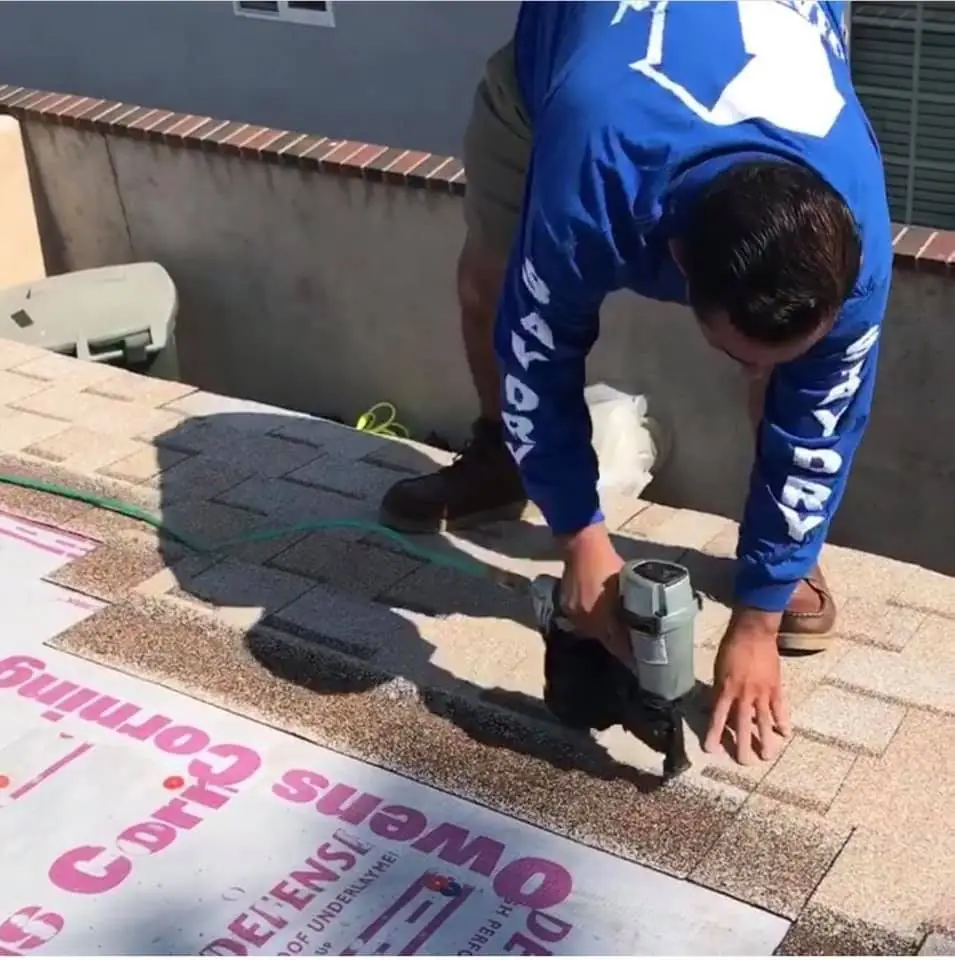
Replacing wind-damaged shingles requires careful removal of compromised materials and proper installation of replacement courses that integrate seamlessly with surrounding shingles. We remove damaged shingles by extracting fasteners from courses above affected areas, sliding out broken materials, and preparing surfaces for new shingle installation.
Replacement shingles must match existing materials in thickness, color, and texture. We maintain inventories of common shingle types and colors serving Mission Viejo properties, enabling same-day repairs for standard materials. When exact matches aren’t available, we source appropriate replacements from manufacturers or suppliers, sometimes using slightly weathered shingles from less visible roof sections to maintain uniform appearance in prominent areas.
Proper installation techniques ensure replacement shingles perform adequately and resist future wind damage. We seal all shingle tabs with roofing cement following manufacturer specifications, install adequate fasteners in proper locations, and ensure correct overlap dimensions. Each replacement receives the same installation attention we provide for complete roof installations, maintaining quality standards regardless of repair scope.
Flashing System Restoration
Flashing repairs require removing shingles adjacent to affected areas, extracting deteriorated flashing components, and installing new materials using proven waterproofing techniques. We use heavy-gauge metals appropriate for Southern California’s climate with properly finished edges preventing accelerated corrosion.
Chimney flashing installations incorporate both step flashing woven into shingle courses and counter-flashing properly embedded in masonry mortar joints. We ensure adequate overlap dimensions, seal all joints with high-performance sealants, and verify water-shedding angles direct moisture away from vulnerable areas. These complex installations require sheet metal fabrication skills and masonry knowledge that general contractors often lack.
Vent pipe boot replacements use premium rubber or synthetic boots offering superior UV and ozone resistance compared to basic products. We properly seal boot bases to roof surfaces, ensure adequate shingle overlap covers boot flanges, and verify vent pipe fit prevents rain infiltration through pipe interiors.
Valley flashing repairs often require removing shingles from both sides of valleys, installing ice-and-water shield underlayment extending beyond valley centerlines, and properly forming valley channels that shed water effectively. We size valley channels based on roof area draining to each valley, ensuring adequate capacity during heavy rainfall.
Leak Repairs and Underlayment Patching
When leaks result from underlayment failures rather than obvious shingle damage, we perform section repairs addressing affected areas. This involves removing shingles from damaged zones, stripping deteriorated underlayment, installing new synthetic underlayment materials, and reinstalling shingles. Section repairs provide cost-effective solutions when damage remains localized.
Extensive underlayment deterioration affecting large roof areas often justifies complete replacement. While more expensive than isolated repairs, comprehensive underlayment renewal combined with shingle reuse or replacement delivers decades of additional service. We provide honest assessments about when section repairs prove adequate versus situations where complete renewal provides better long-term value.
Ventilation System Improvements
When inspection reveals inadequate ventilation contributing to premature shingle deterioration, we recommend and install appropriate improvements. This may include adding soffit vents for intake air, installing ridge vents for exhaust, adding gable vents for cross-ventilation, or installing power attic ventilators in situations where passive ventilation proves inadequate.
Proper ventilation system design balances intake and exhaust capacities, ensuring continuous airflow without creating pressure imbalances. The International Residential Code provides minimum ventilation requirements, but we often recommend exceeding minimums for Mission Viejo’s intense climate. Enhanced ventilation extends shingle life, improves energy efficiency, and reduces attic moisture problems contributing to mold growth.
Preventive Maintenance for Shingle Roofs
Regular maintenance identifies developing problems before they cause interior damage while maximizing your shingle roof’s service life. Our maintenance programs address shingle roofing’s specific care requirements.
Seasonal Inspections
Bi-annual inspections—before and after winter rainy seasons—identify issues requiring attention. We examine shingle condition, clean gutters and drainage systems, check flashing integrity, clear debris accumulation, and assess ventilation function. These proactive assessments typically reveal 2-4 maintenance items per property that prevent more extensive repairs when addressed promptly.
Pre-winter inspections prove particularly valuable, allowing repairs before rainstorms exploit vulnerabilities. Post-winter assessments document any storm damage requiring attention and verify drainage systems function properly after seasonal debris accumulation.
Debris and Moss Removal
Leaves, branches, and organic debris accumulating in valleys and against roof penetrations trap moisture and accelerate shingle deterioration. We remove accumulated materials without damaging shingles, clear all drainage pathways, and trim overhanging branches contributing to debris problems. This simple maintenance significantly extends shingle and underlayment service life.
Moss growth on shingle surfaces retains moisture that accelerates material breakdown. We apply safe, effective treatments eliminating biological growth without harming shingles or surrounding landscaping. Zinc or copper strips installed at ridge lines provide ongoing moss prevention through natural metal ion release during rainfall.
Minor Repairs Before They Escalate
Maintenance inspections identify minor issues like loose shingles, small flashing gaps, or early-stage deterioration that simple repairs address inexpensively. Fixing these small problems during routine visits prevents them from developing into major failures requiring extensive repairs or premature replacement. This proactive approach saves thousands of dollars over your roof’s lifespan.
Service Areas Throughout Mission Viejo and South Orange County
Our shingle roof repair expertise serves properties throughout Mission Viejo and surrounding communities where asphalt shingle roofing remains common.
Mission Viejo Neighborhoods
While newer Mission Viejo developments predominantly feature tile roofing, substantial neighborhoods built during the 1970s-1980s contain thousands of shingle roofs. We’ve served properties throughout La Paz, Mission Ridge, and other established communities, developing familiarity with common construction characteristics and typical repair needs affecting homes from different development eras.
Lake Forest and Foothill Ranch
These adjacent communities feature significant asphalt shingle roofing populations requiring regular repair services. We provide comprehensive shingle repair throughout these areas with typical response times of 30-45 minutes for service appointments.
Surrounding Orange County Communities
Our shingle repair services extend throughout Laguna Niguel, Rancho Santa Margarita, Aliso Viejo, Laguna Hills, and other South Orange County communities. This comprehensive coverage ensures all nearby residents access professional shingle roofing expertise when repairs become necessary.
Insurance Claims for Shingle Roof Damage
Navigating homeowner insurance claims for shingle damage requires understanding how adjusters assess asphalt roofing systems and value repairs.
Storm Damage Documentation
Insurance companies require proof that specific storm events caused damage rather than normal wear and deterioration. We document weather events using National Weather Service records, photograph damage with context showing overall roof condition, and create detailed inventories supporting claim submissions. This thorough documentation improves approval rates and ensures adequate compensation.
Depreciation Recovery Strategies
Insurance adjusters frequently apply depreciation to older shingle roofs, reducing initial payouts based on age-related value reduction. We help property owners recover this depreciation through proper documentation and supplemental submissions proving damage resulted from covered events rather than maintenance neglect. Our expertise maximizes insurance recovery for legitimate claims.
Matching and Code Upgrade Provisions
When storm damage requires replacing substantial roof sections, insurance policies may cover costs ensuring repairs match undamaged areas. Additionally, code upgrade coverage addresses costs when repairs must meet current building standards exceeding original construction requirements. We identify applicable coverage provisions, ensuring you receive all benefits your policy provides.
Frequently Asked Questions About Shingle Roof Repairs
How long do asphalt shingle roofs last in Mission Viejo?
Standard three-tab shingles typically last 15-20 years in Southern California’s intense climate, while architectural shingles may reach 20-25 years with proper maintenance. These lifespans fall short of manufacturer ratings developed using different climate models. UV intensity and thermal stress in Mission Viejo accelerate deterioration compared to cooler regions where ratings originate.
Can individual damaged shingles be replaced effectively?
Yes, isolated shingle replacement works well for limited damage affecting specific areas. However, color matching challenges arise as weathered shingles fade differently than new materials. We blend repairs as effectively as possible, sometimes using weathered shingles from less-visible areas for prominent locations requiring better matches.
Should I repair or replace my 15-year-old shingle roof?
This depends on overall condition assessment. If most shingles remain intact with good granule retention and only isolated areas show damage, repairs provide good value. However, widespread deterioration, significant granule loss, or multiple previous repairs often indicate replacement timing approaches. We provide honest condition assessments helping you make informed decisions.
Why do my shingles curl at the edges?
Edge curling results from moisture cycling, thermal stress, and often inadequate attic ventilation baking shingles from below. Once curling begins, it progresses inevitably as materials lose flexibility. Severely curled shingles require replacement, while ventilation improvements help protect new materials from similar problems.
How much do shingle roof repairs typically cost?
Minor repairs addressing 10-20 shingles typically cost $300-$800 depending on accessibility and materials. Flashing repairs range $400-$1,200 depending on complexity. Section repairs addressing larger damaged areas cost $1,500-$4,000. Complete shingle replacement for typical Mission Viejo homes ranges $8,000-$15,000 depending on size, complexity, and material selection.
Will insurance cover my shingle roof repairs?
Coverage depends on damage causes and your specific policy terms. Storm damage from wind or hail typically receives coverage subject to deductibles. Wear-and-tear deterioration doesn’t qualify for coverage. We provide documentation supporting legitimate claims while honestly assessing whether damage results from covered events or normal aging.
How often should shingle roofs receive professional inspection?
Annual inspections identify developing problems before they cause interior damage. Properties with mature trees overhead or in high-wind areas benefit from twice-yearly inspections. After severe storms, immediate inspection documents damage for insurance purposes and identifies urgent repairs preventing water intrusion.
Can you match my existing shingle color for repairs?
We maintain inventories of common shingle types and colors serving Mission Viejo properties. However, UV exposure fades shingles over time, making perfect matches challenging. We source closest available matches and blend repairs to minimize appearance differences. For highly visible areas requiring better matches, we sometimes use weathered shingles from less-visible roof sections.
What causes shingles to lose granules prematurely?
Manufacturing defects occasionally cause early granule loss potentially qualifying for warranty coverage. More commonly, intense UV exposure and thermal stress degrade asphalt binders in Southern California’s climate. Walking on roofs also dislodges granules, which is why we minimize foot traffic during inspections and repairs.
Should repairs include upgrading to architectural shingles?
When replacing substantial roof sections, upgrading to thicker architectural shingles provides enhanced durability and improved appearance. However, mixing shingle types creates visible differences. Complete replacement provides the best opportunity for upgrading, while section repairs typically use materials matching existing installations to maintain uniform appearance.
Why Choose Our Shingle Roof Repair Services
Our shingle roofing expertise combines decades of experience with commitment to quality workmanship and customer service. We understand how Southern California’s unique climate affects asphalt roofing materials, allowing us to provide repairs proven effective in Mission Viejo’s demanding environment.
Every repair includes comprehensive documentation, transparent pricing without surprise additions, and workmanship warranties backing our quality commitments. We treat your property respectfully, protect landscaping during work, and conduct thorough cleanup. Our honest assessments help you make informed decisions about repair versus replacement timing based on your specific situation and budget.
📍 Office Address: 26040 Acero Suite 202, Mission Viejo, CA 92691
📞 24/7 Hotline: (949) 528-7663
✉ Email: roofer714@gmail.com
🌐 Website: https://missionviejoroofrepairs.com/
When your Mission Viejo shingle roof needs professional repair, contact our team for expert assessment and proven solutions. We’re committed to maximizing your existing roof investment while ensuring reliable protection for your home.
This specialized shingle roof repair service complements the comprehensive roofing expertise available through Stay Dry Roofing Mission Viejo, serving South Orange County with professional solutions for all roofing needs.